Why AI Music Is Taking Over: A Brutal Reality Check
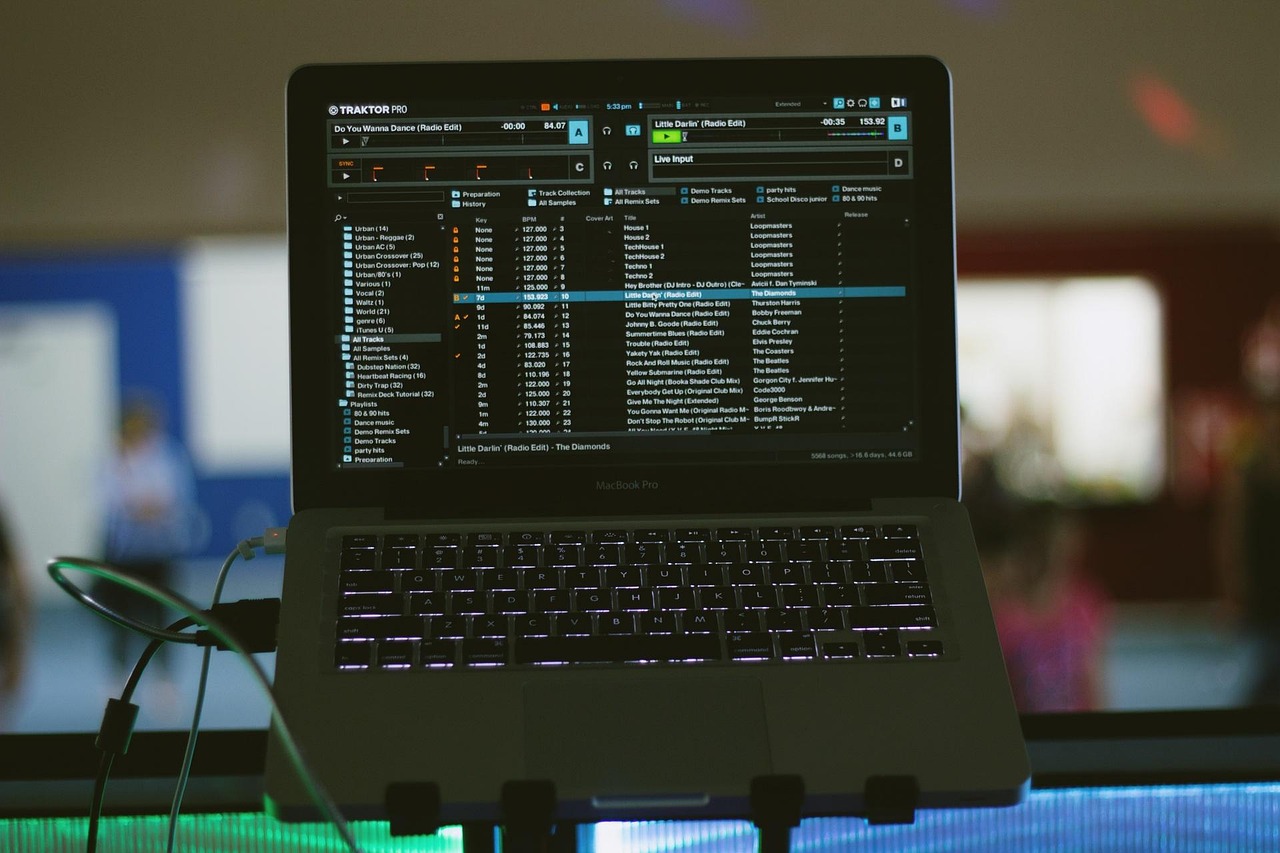
I pulled up a client session last Tuesday, staring at a massive 96-track arrangement that had taken a four-piece indie outfit six months and twelve thousand dollars to record, mix, and master. The lead vocal track was riddled with phase cancellation, the acoustic guitar sounded like it was tracked inside a cardboard refrigerator, and the producer spent three entire days manually crossfading vocal comps because the artist couldn’t maintain pitch consistency. Then I dragged a prompt-generated reference track into the DAW. Zero phase issues, pristine frequency response curves across the 20Hz to 20kHz spectrum, and a master bus hitting a clean -14 LUFS without pumping. The band hated to hear it. But the physics don’t care about your feelings.
We need to stop pretending generative audio is a passing novelty for internet hobbyists. In my two decades of acoustic calibration, analog console restoration, and critical listening audits, I have never seen a technological shift move this violently through the production pipeline. The purists keep crying about soul and analog warmth while ignoring the brutal math of commercial audio economics. Let’s look at the actual data.
- Generative models now bypass traditional multi-mic bleed issues, dropping Total Harmonic Distortion plus Noise (THD+N) to near-zero margins.
- Sync licensing agencies are already quietly shifting 30% of their routine commercial cue budgets to AI-generated stems to avoid clearance delays.
- The traditional 50/50 co-write publishing split is fracturing as labels realize they own 100% of the parameter weights in proprietary AI models.
The Cold Math of Studio Overhead vs. Neural Networks
Look at what it actually costs to produce a competitive pop track in 2024. You are renting a room with a proper floating floor and bass traps, paying a tracking engineer, hiring session players, renting vintage outboard gear, and paying a mixing and mastering engineer. You are easily dropping $3,500 to $8,000 per track before a single note hits Spotify. And what is the average return? At roughly $0.0038 per stream, a track needs nearly a million streams just to cover the basic recording budget.
Now look at modern neural audio engines. We are running local and cloud-based models capable of rendering multi-instrument stems at 24-bit/96kHz resolution in under ninety seconds. Are there artifacts in the transient response of cymbals? Sometimes. Do string patches occasionally exhibit unnatural phase correlation? Sure. But the gap is closing every three months. When an independent creator can generate a broadcast-ready cinematic cue for zero studio overhead, traditional session work is going to take a permanent hit.
🎵 Studio Acoustics & Streaming Royalty Calculation Matrix
| Production Method | Average Upfront Cost | Avg. THD+N Benchmark | Time to Master Delivery |
|---|---|---|---|
| Traditional Live Band Studio | $5,000 – $12,000 | 0.001% – 0.05% (Analog gear dependent) | 3 to 6 Weeks |
| Hybrid DAW + Plugin Suite | $1,500 – $4,000 | 0.0002% (In-the-box digital) | 1 to 2 Weeks |
| Generative AI Audio Pipeline | $50 – $200 subscription | 0.0004% (Clean synthetic output) | 15 Minutes |
Parsing the Spectral Reality
Walk into any high-end mastering suite and look at the FabFilter Pro-Q or Izotope Ozone displays. Engineers spend hours carving out muddy low-mids around 250Hz and tensing up over harsh sibilance at 6kHz. AI models are now trained on millions of commercially successful masters, meaning they inherently understand how to balance spectral energy to translate cleanly across cheap Bluetooth earbuds, car stereos, and club line arrays pushing 104 dB SPL.
Big mistake to think this technology stops at loop generation. We are already seeing intelligent stem separation and neural mixing plugins that make traditional EQ matching and sidechain compression look like hand-cranked machinery. When a software plugin can dynamically fix phase cancellation across a multi-mic drum kit in real time, the value proposition of human trial-and-error engineering plummets.
The Economic Fallout for Producers and Songwriters
Let’s address the elephant in the room: copyright and publishing royalties. The old model of splitting master rights 50/50 with a record label or dividing publishing percentages among four co-writers is breaking down. If a solo artist generates the foundational instrumental using an AI model they subscribe to, who owns the mechanical rights? The platform? The developer? Or the prompt engineer?
Labels are terrified, but they are also quietly buying stakes in every generative audio startup they can find. They know that content velocity is king. Streaming services are drowning in a sea of identical uploads, and algorithms are going to favor hyper-targeted, infinitely variable audio streams designed for specific moods, workout tempos, and sleep frequencies. Human artists will still exist, but they will monetize their personal brand and live performance, while the background music economy is entirely automated.
Stop fighting the waveform. Adapt your DAW workflow, learn how to steer the neural models, and get ahead of the curve before your studio monitors collect dust.
Frequently Asked Questions
Does AI music generation sound like professional human production?
Not across every frequency band quite yet, but raw generative models running on 24-bit/96kHz pipelines are closing the spectral gap fast. The artifacts in high-frequency transient responses are disappearing thanks to advanced DSP plugin modeling and lower THD+N thresholds.
How do streaming platforms handle royalties for AI-generated tracks?
Distributors like DistroKid and TuneCore accept AI output as long as you own the underlying rights or prompts, paying out the standard $0.0038 per stream. However, major labels are heavily lobbying for metadata tagging to flag synthetic stems.
Will AI completely replace human session musicians?
For basic backing tracks, bed loops, and sync licensing filler? Absolutely. Live physical performance with genuine acoustic room interaction and human micro-timing will survive as a luxury niche, much like vinyl.

Verified practitioner contributor & performance researcher at Studio Master Pro.